Home Game Question: Who Shuffles and Deals If There Is No Dealer?
If your home poker game has no hired dealer, someone at the table has to shuffle and deal. The simplest arrangement is for the player identified by the dealer button to deal the hand, then pass the button one seat clockwise after the hand ends. That keeps the deal, blinds, and turn order moving around the table in a predictable way.
Before the first hand, agree on the home poker dealer rules: who physically deals, how the button moves, and what happens if a card is exposed or a player acts out of turn. A quick agreement prevents the most common home-game dispute: two players thinking someone else was responsible.
The Short Answer: Rotate the Dealer Button
In a casino, a professional dealer handles the cards while a separate dealer button marks the nominal dealer position. In a home game without a dedicated dealer, one player usually does both jobs: the button shows who is the dealer for that hand, and that player shuffles and deals.
After each hand, move the button one seat clockwise. The player to the left of the button posts the small blind, and the next player to the left posts the big blind. Action before the flop starts with the player to the left of the big blind; after the flop, action starts with the first active player to the left of the button.

Some groups prefer that the player to the button’s right physically deals, so the dealer can deal to themselves last or avoid handling their own cards. That can work too, but decide in advance whether the button marks the nominal dealer position or the person actually doing the dealing. The important thing is that the button and blinds still move consistently.
Dealer Responsibilities in a Home Game
Think about it: dealing is more than pushing cards across the table. The dealer is also the table’s traffic controller. They do not decide who wins, but they help keep the hand in order and make sure the rules everyone agreed to are followed.
- Shuffle and offer a cut. Shuffle thoroughly, then offer the deck to a player to cut if that is your group’s procedure. A cut is especially useful when players take turns dealing.
- Deal the hole cards. Starting with the player to the dealer’s left, give each player one card at a time, clockwise, until everyone has two. Keep the cards face down.
- Manage the board. Before the flop, burn one card face down, then deal three community cards face up. Burn one before the turn and one before the river, dealing one community card each time.
- Keep action in order. Remind players whose turn it is, but don’t make their decisions for them. Players should say “call,” “raise,” “fold,” or “check” clearly and put chips in the pot in a way the table can understand.
- Protect the pot and cards. Keep folded cards separate from the muck and avoid mixing them into the deck or pot until the hand is settled. Don’t award a pot before checking the hands when a showdown is required.
- Pause for irregularities. If a card is exposed, the wrong number of cards is dealt, or action gets out of order, stop and follow the house rule you agreed on. Don’t quietly improvise a fix that benefits one player.
A rotating dealer is still a player in the hand. They should not be expected to referee a complicated argument alone. If there’s a dispute, pause, explain what happened, and use the group’s agreed rule consistently. For recurring games, write down the house rules before people start playing.
Simple Shuffling and Dealing Rotation
- Set the button. Choose the first dealer position randomly, or draw for it.
- Post blinds. The two players immediately left of the button post the small and big blinds.
- Shuffle and cut. The dealer shuffles and offers a cut if that is part of your home-game routine.
- Deal clockwise. Give each player two face-down cards, one at a time, starting with the seat immediately left of the button.
- Run the board. Burn and deal the flop, turn, and river in order, allowing betting between each street.
- Finish the hand and move the button. Award the pot, then move the button one seat clockwise for the next hand.
That’s https://pokerhānds.com/ the standard shuffling dealing rotation in a casual game. If the button player is also dealing, they still receive their cards in the normal order. They should deal carefully and avoid flashing their own hole cards while handling the deck.
Texas Hold’em Hand Rankings: What Beats What?
When players reach showdown, each player makes the best five-card hand from any combination of their two hole cards and the five community cards. You can use both hole cards, one, or neither. Suits do not have different strengths: a spade is not higher than a heart, and a flush in one suit does not automatically beat a flush in another.
Rank Hand Example 1 Royal flush A-K-Q-J-10, all one suit 2 Straight flush Five consecutive cards, all one suit 3 Four of a kind Four cards of the same rank 4 Full house Three of a kind plus a pair 5 Flush Five cards of one suit, not consecutive 6 Straight Five consecutive cards, not all one suit 7 Three of a kind Three cards of the same rank 8 Two pair Two different pairs 9 One pair Two cards of the same rank 10 High card No pair or betterFor hands of the same category, compare the cards that make the hand, then the kickers. For example, if one player has a pair of kings with an ace kicker and another has a pair of kings with a queen kicker, the ace kicker wins. If the best five-card hands are identical, the pot is split.
Don’t confuse a straight draw with a flush draw. A straight draw is about making five consecutive ranks; a flush draw is about making five cards of the same suit. A hand can have both, but they are different draws with different outs.
Hand Odds and Probabilities
Odds can help players understand how rare a hand is, but remember that a player’s chance of winning depends on the board, the opponent’s cards, and the action—not just on the overall frequency of a hand category. A useful reference point: Four of a kind odds: 0.0240% (1 in 4,164), also commonly stated as about 1 in 4,165. The slight difference is just rounding.
That figure refers to the chance of being dealt a five-card four-of-a-kind hand in a standard five-card hand distribution. It is not the same as the probability of making quads by the river in Texas Hold’em, where players have access to seven cards by showdown. Always check what kind of hand and deal the odds describe before comparing numbers.
For Hold’em draws, players often count “outs”: unseen cards that appear to improve their hand. Outs are an estimate, not a guarantee. Some apparent outs may give an opponent a better hand, or may not actually make you a winner. The numbers below assume all counted outs are clean and ignore opponent-specific card information.
Draw Odds by Flop, Turn, and River
With a typical flop draw, there are 47 unseen cards from your perspective before accounting for an opponent’s hidden cards. If you miss the turn, there are 46 unseen cards for the river. The turn-to-river percentage is the chance to hit on that single next card; the flop-to-river percentage accounts for getting two chances.
Example draw Outs Hit on turn Hit by river from flop Gutshot straight draw 4 8.7% 16.5% Open-ended straight draw 8 17.4% 31.5% Flush draw 9 19.6% 35.0% 15-out combo draw 15 32.6% 54.1%A standard flush draw on the flop usually has nine outs: thirteen cards of that suit exist, and four are visible between your hand and the board. An open-ended straight draw usually has eight rank-based outs. But be careful: a card that completes your straight may also complete an opponent’s flush, and an apparent out may be “dirty.” Count what actually helps you win, not just what makes your hand look stronger.
For a quick mental estimate with one card to come, multiply your outs by about two to get a rough percentage. With two cards to come from the flop, multiply by about four. It’s a shortcut, not an exact calculation: a 9-out flush draw is roughly 18% to hit on the turn and about 36% by the river using the shortcut, while the more precise figures are 19.6% and 35.0%.
Use Printable Cheat Sheets and Equity Charts
New players don’t need to memorize every ranking and probability before sitting down. Keep printable cheat sheets beside the table with the hand rankings, betting order, and basic draw odds. Last month, I was working with a client who was shocked by the final bill.. A one-page reference is often more useful than stopping the game to search on a phone.
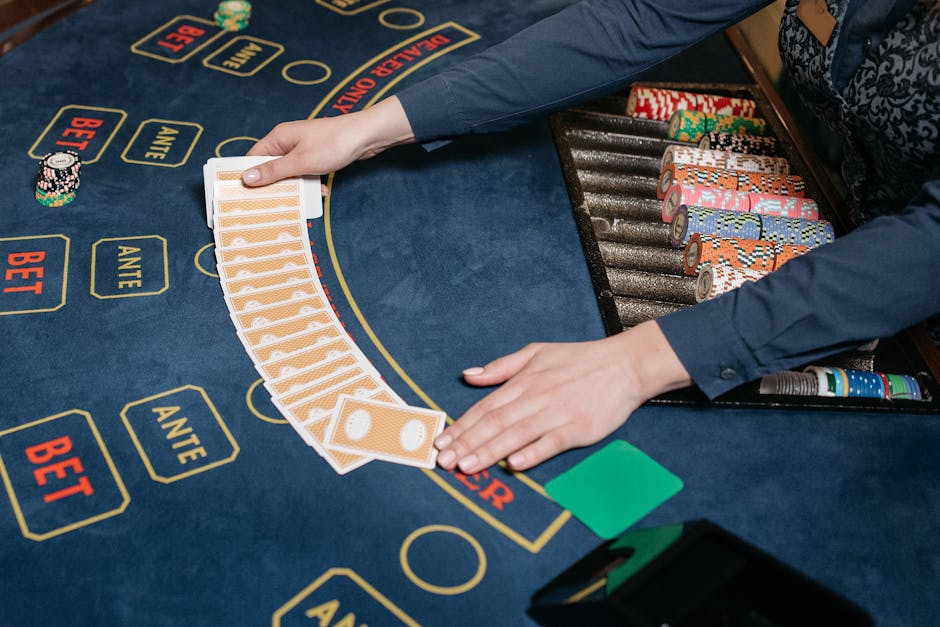
Equity charts can also help players compare starting hands or understand how a hand fares against a range of possible opponent hands. Equity means a hand’s share of the pot on average if the remaining cards are dealt out. It is not the same as the chance to hit a particular draw: you can have equity without improving, or improve and still lose.
Make the Rules Clear Before the First Hand
For most home games, the cleanest setup is straightforward: the button marks the dealer position, the button player deals, the blinds sit immediately to the button’s left, and the button moves one seat clockwise after every hand. If another player handles the cards, state that clearly and keep the button’s position separate from the physical dealer’s job.
Agree on a procedure for cuts, exposed cards, out-of-turn action, and showdown disputes. Then keep a hand-ranking chart and a basic draw-odds sheet nearby. Clear dealer responsibilities and a consistent rotation make the game smoother—and leave everyone focused on the poker rather than arguing about whose turn it is to shuffle.